Guru Ravidass Community Centre
Address
1835 40 Street Southeast
Calgary, Alberta T2B 1B5
Opening Hours
- Monday: Closed
- Tuesday: Closed
- Wednesday: Closed
- Thursday: Closed
- Friday: Closed
- Saturday: Closed
- Sunday: 10:00 AM - 3:00 PM
About Guru Ravidass Community Centre
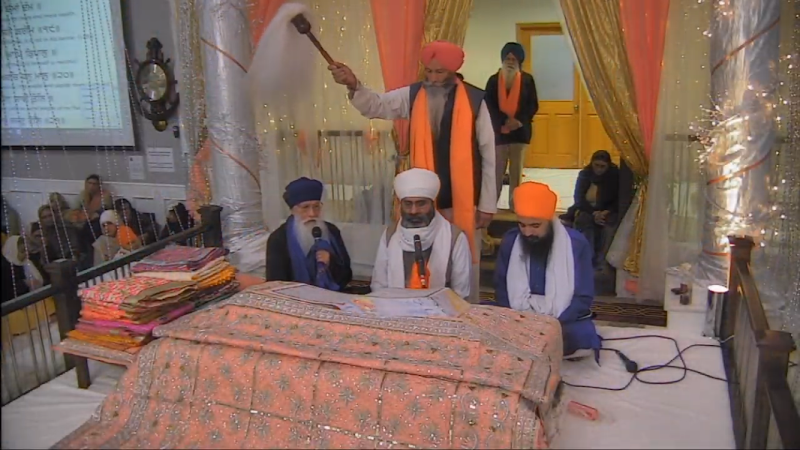
Guru Ravidass Society of Calgary (GRSOC) is a charitable religious organization established in 2000 by the Ravidass community in Calgary. GRSOC is dedicated to upholding the principles and teachings of Guru Ravidass, a 14th-century saint, poet, and social reformer renowned for his advocacy for the downtrodden and his vision of an egalitarian society. The society offers various services, including a YouTube live stream for its religious programs and events. Historically, GRSOC's faith is rooted in the Ravidas Panth, a religious sect founded on Guru Ravidass's teachings. The organization actively participates in community programs and celebrates significant religious events such as the birthday celebrations of Guru Ravidass Ji Maharaj. GRSOC plays a vital role in fostering a sense of community and spiritual connection for its members, adhering to the teachings of a formless God and promoting social equality. The society is managed by an executive committee and a board of directors.
Gurdwara Details
History
A Calgary based charitable religious organization founded in 2000 by the Ravidass community of Calgary. Following principles of Guru Ravidass’ teaching and participating in community programs. Ravidas Panth is a religious sect founded in the 14th-century. The Ravidassia Dharm, also called Ravidas Panth is a religious sect, founded in the 14th-century. It is based on the teachings of the 14th century guru Ravidass, revered as a Satguru by the Ravidassia community. Historically, Ravidassia represented a range of beliefs in the Indian subcontinent, with some devotees of Ravidass counting themselves as Ravidassia, but first formed in the early 20th-century in colonial British India. The Ravidassia community began to take on more cohesion following 1947, and the establishment of successful Ravidassia communities in the diaspora. Estimates range between two to five million for the total number of Ravidassias. Ravidassias believe that Ravidas is their Guru (saint) whereas the Sikhs have traditionally considered him as one of many bhagats (holy person). Further, Ravidassias accept living sants of Ravidass Deras as Guru A new Ravidassia religion was launched following an assassination attack on their visiting living Guru Sant Niranjan Dass and his deputy Ramanand Dass in 2009 in Vienna by Sikh militants. Ramanand Dass died from the attack, Niranjan Dass survived his injuries, while over a dozen attendees at the temple were also injured.This triggered a decisive break of the Ravidassia group from the orthodox Sikh structure. Prior to their break from Sikhism, the Dera Bhallan revered and recited the Guru Granth Sahib of Sikhism in Dera Bhallan. However, following their split from mainstream Sikhism, the Dera Bhallan compiled their own holy book based exclusively on Ravidas’s teachings, the Amritbani Guru Ravidass Ji, and these Dera Bhallan Ravidassia temples now use this book in place of the Guru Granth Sahib. Guru Ravidass Ji is one of the most famous untouchable Sant-poets of the 15th century India. He is known as a leading star of the North Indian Bhakti movement, especially the nirguna sampradaya or sant parampara (sect or tradition of devotees of a formless God). He was a cobbler, Sant, poet, philosopher and social reformer all rolled into one. He expressed his spiritual and social philosophy in poetry, which is full of radical fervor and boundless love for the formless God. His poetry reflected his vision of the social and spiritual needs of the downtrodden and underlined the urgency of their emancipation. He, therefore, is regarded as a messiah of the downtrodden. They revere him as devoutly as Hindus revered their Gods and Goddesses, and Sikhs their Gurus. They worship his image and showed their faith in his spiritual power. His hymns were recited every morning and night, and his birthday was celebrated as a religious event. They raise slogans like Ravidass Shakti Amar Rahe (the spiritual power of Guru Ravidass Ji live forever) during his birth anniversaries. Shri Guru Ravidass Ji was born in the year 1377 AD i.e. Bikrami Samvat 1433 (widely accepted by most scholars & institutions) to father Shri Santokh Dass Ji and Mother Kalsa Devi Ji in Chamar caste, also known as Kutbandhla, one of the Scheduled Castes in Uttar Pradesh. Scheduled Castes were oppressed and their touch and sight were considered polluting by the upper castes. Ravidass revolted against this inhuman system of untouchability. He adopted Bhakti as a mode of expression for his revolt. His Bhakti-based method of revolt was very novel and daring. It was novel because of its emphasis on compassion for all and absolute faith in God; daring in the sense that he did not give damn to rituals of the Brahmins. He challenged the tyranny of Brahmins and defied them by wearing Dhoti (cloth wrapped around the waist), Janeue (sacred thread) and Tilak (sacred red mark on forehead) that were forbidden for the untouchables. Though he attired himself like an upper caste, he did not hide his caste. He continued with his hereditary occupation of making/mending shoes. What made the image of Ravidass a catalyst in the emergence of Dalit consciousness was his being a Shudra and at the same time a saint of very high repute. Guru Ravidass Ji gave a new meaning to Bhakti by projecting it as a method of social protest against the centuries-old entrenched structures of Brahminical domination. He rejected all forms of religious rituals and sectarian formalities. He also commented graphically on the cursed and abject living conditions of millions of fellow downtrodden. His Bhakti approach was a non-violent struggle for the emancipation and empowerment of the Shudras. Though he combined humility with Bhakti, his concept of formless God reflected an altogether different picture. God of Guru Ravidass Ji was not humble but graceful. He was kind to the downtrodden. He elevated and purified the so-called untouchables. Aaisee lal tujh binu kaunu karai. Gareeb niwaaju guseea meraa maathai chhatar dharai… neecho uooch karai meraa govind kaahoo te na darai [refrain My Beloved, besides you who acts like this? Protector of the poor, my Master. You hold a royal umbrella over my head. Guru Ravidass Ji Maharaj envisioned an egalitarian model of state for ensuring human rights and civil liberties for all alike. He called his ideal state as Begumpura (free from sorrows). In his ideal state no one would be discriminated against on the basis of caste and religion and everyone would be free from the burden of taxes and worries of food. His ideal state would be free from the graded system of caste hierarchy. There would be no segregated colonies for the downtrodden and they would be free to move around without caste prejudice. In other words, in Begumpura the evil of untouchability would cease to exist. Though Begumpura was an ideal state as visualized by Ravidass, it was not a mere figment of his mind. In fact, its articulation was based on in-depth understanding of the socio-economic and political conditions prevailing during his lifetime. He lived during the period when Shudras were doubly oppressed by their political masters along with the members of higher castes; and by the Brahmins, the custodians of Hindu religion. Guru Ravidass Ji firmly believed that God created all human beings and resided in all of them. If the same God pervaded the entire humanity, then it is foolish to divide the society on the basis of caste. He thus condemned the division of mankind on the basis of caste. He said Jo ham shehri so meet hamara [whoever is my fellow citizen, is my friend]. It is in this context that the egalitarian social philosophy of Guru Ravidass Ji expressed in the mode of poetry became the manifesto of the Dalit consciousness in Punjab. The establishment of a large number of Ravidass Deras by the Dalits in Punjab and overseas over the last few years is vivid testimony to worldwide popularity of Guru Ravidass Ji Maharaj.
Unique Features
Ravidas Panth is a religious sect founded in the 14th-century. Based on the teachings of the 14th-century guru Ravidass. Ravidassias believe that Ravidas is their Guru (saint). They have compiled their own holy book based exclusively on Ravidas’s teachings, the Amritbani Guru Ravidass Ji. Guru Ravidass Ji is revered as a Satguru. Guru Ravidass Ji is considered a messiah of the downtrodden. They worship his image and show faith in his spiritual power. His birthday is celebrated as a religious event. Celebrations of gurpurab from January 30th to Feb 1st. Envisions an egalitarian model of state called Begumpura.
Frequently Asked Questions
How can I contact Guru Ravidass Community Centre?
Call Guru Ravidass Community Centre at (403) 272-7447 or visit https://grsoc.ca/.
When was Guru Ravidass Community Centre established?
Guru Ravidass Community Centre was established in 2000.
Does Guru Ravidass Community Centre have an official website?
Yes, you can visit https://grsoc.ca/ for official updates.
What are the opening hours for Guru Ravidass Community Centre?
Guru Ravidass Community Centre is open Sunday: 10:00 AM - 3:00 PM.
What languages are spoken at Guru Ravidass Community Centre?
Guru Ravidass Community Centre supports sangat in Punjabi, English.
More gurdwaras near this location
Discover other gurudwaras around Calgary, Alberta.